Concrete Sidewalk Built for Safe Industrial Facility Access
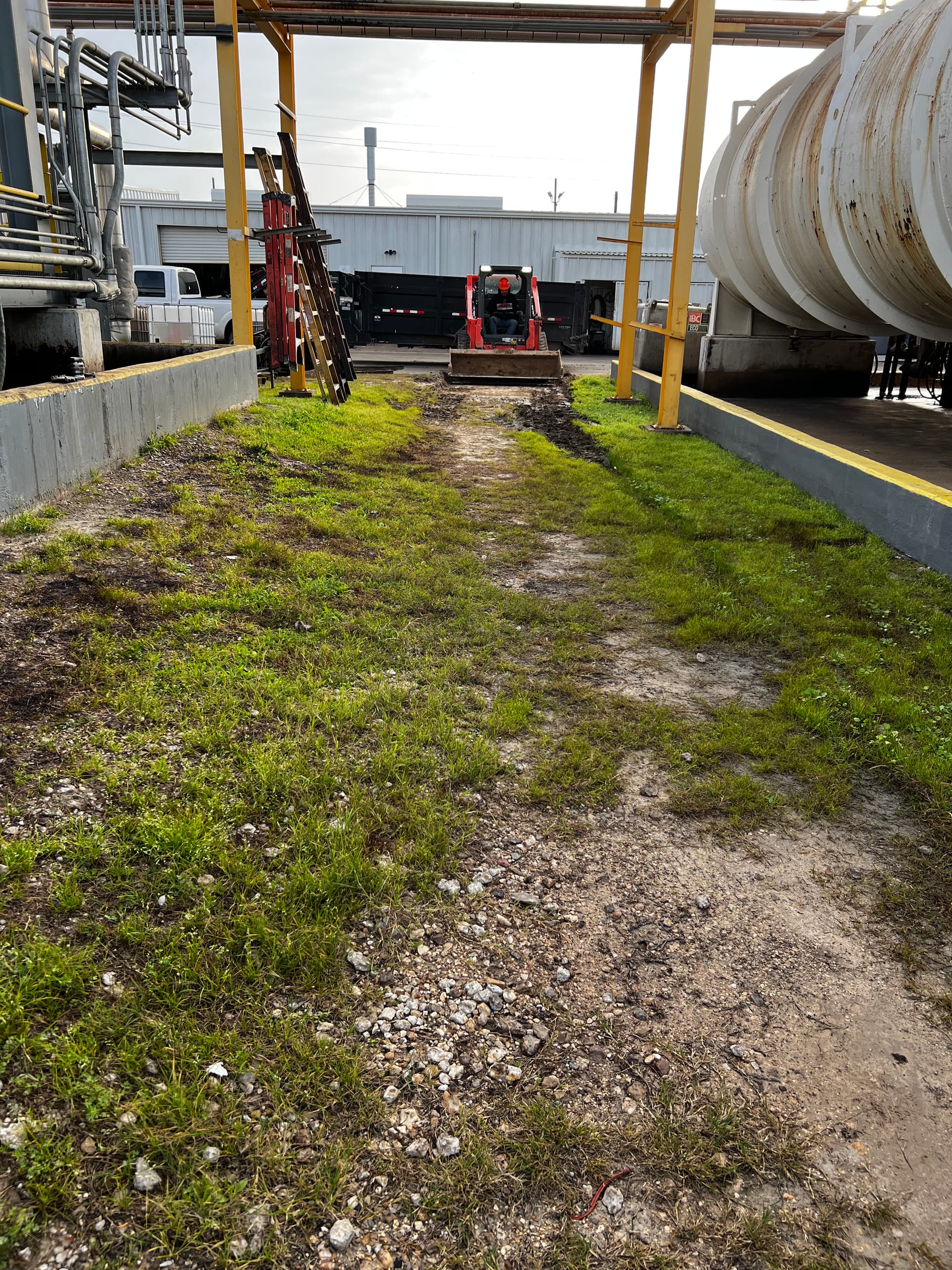
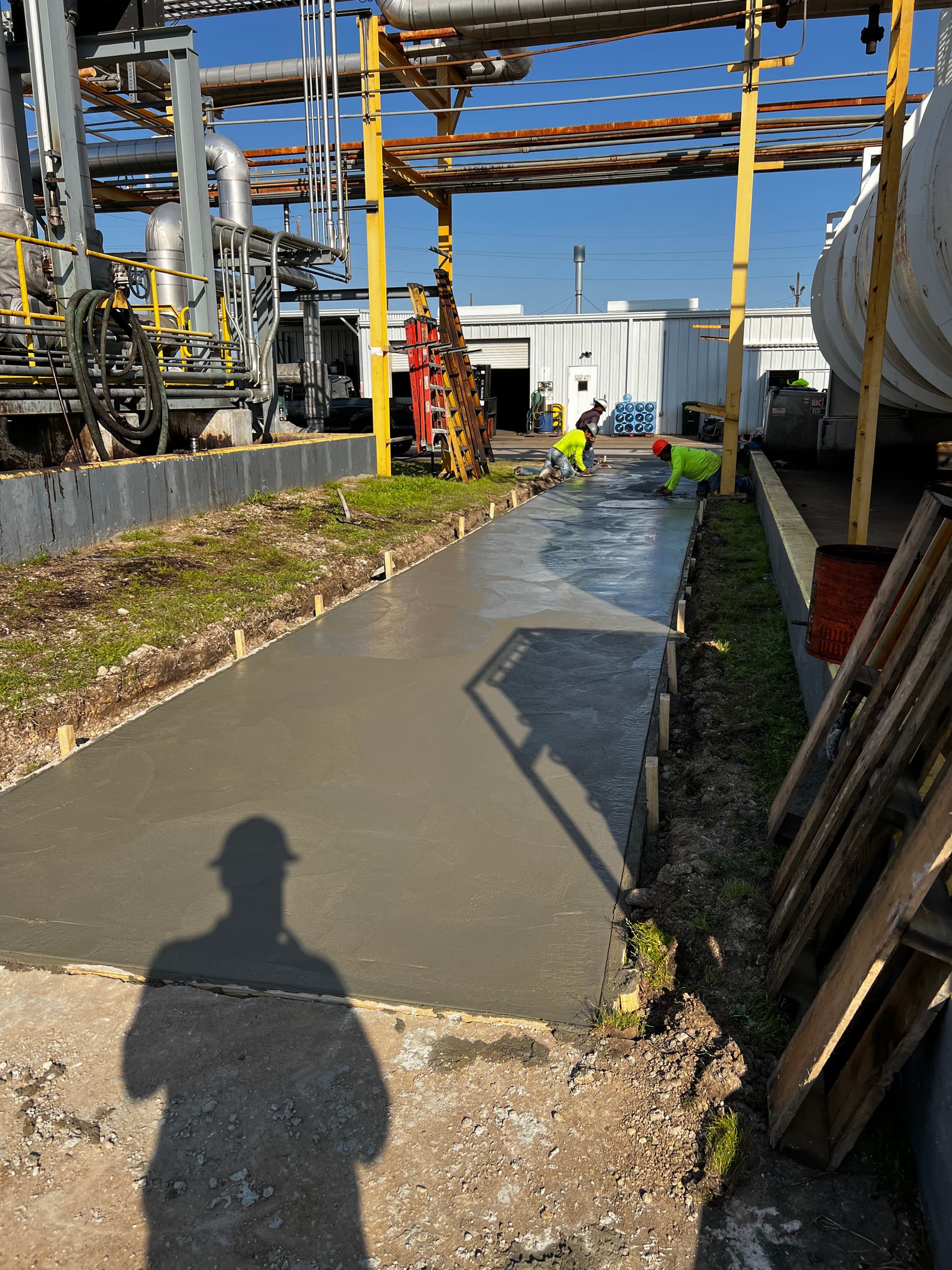
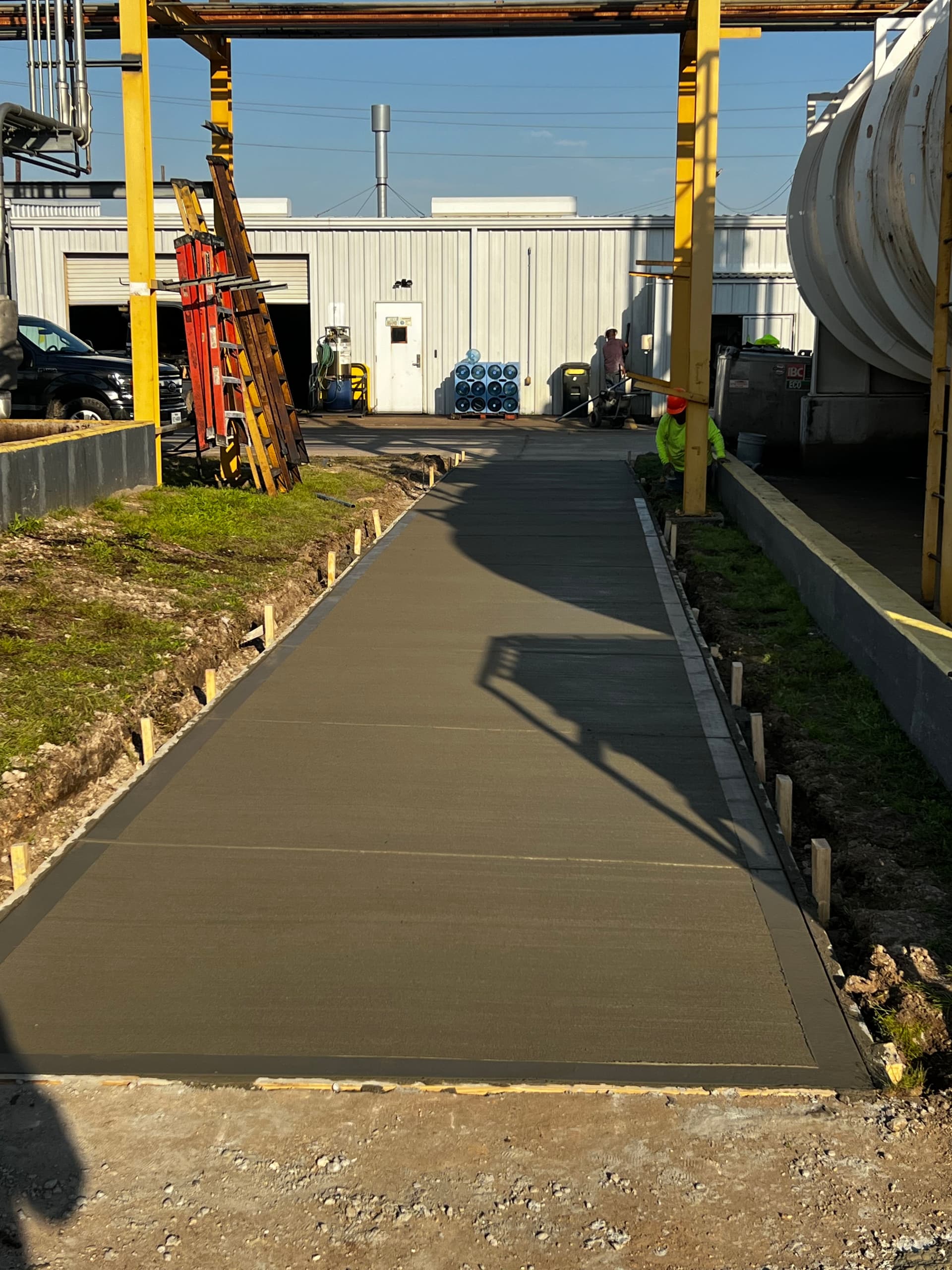
Here's what we were working with - a rough, overgrown stretch of ground between industrial equipment and a utility room. Patchy grass, loose rock, uneven dirt. Not exactly a safe or reliable path for a crew that needs to move through that space every day. That kind of ground creates real hazards, especially in an active industrial facility.
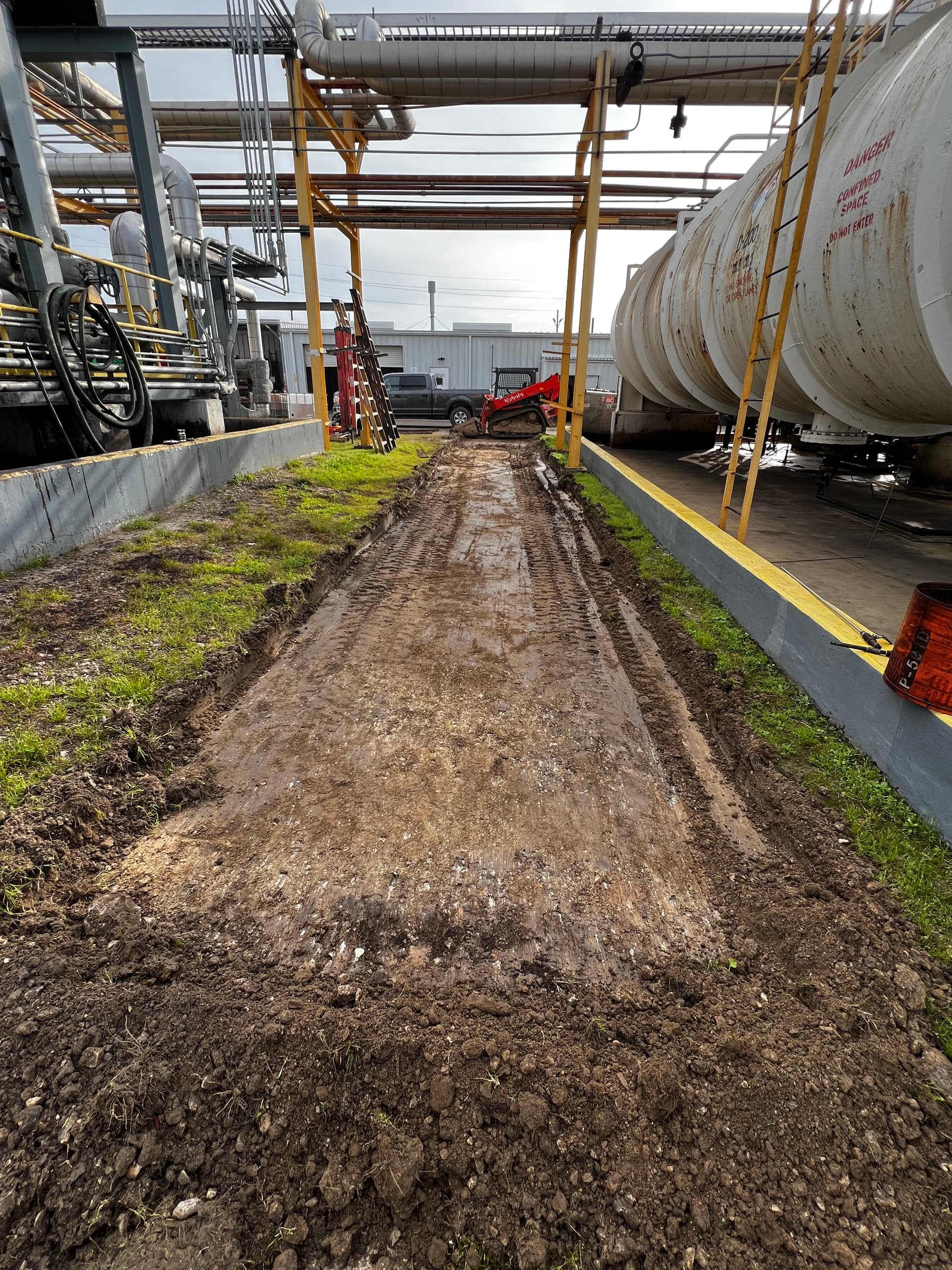
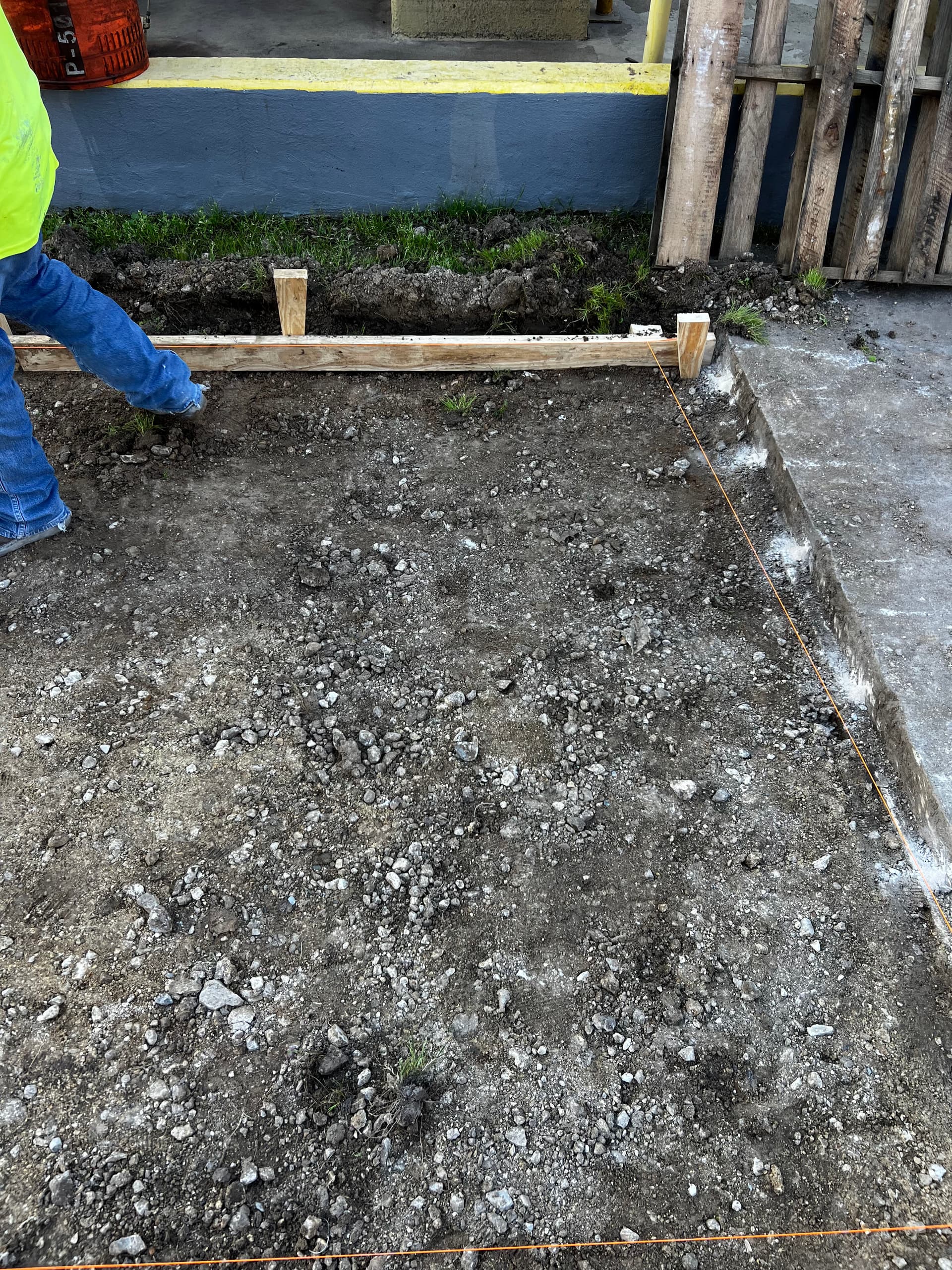
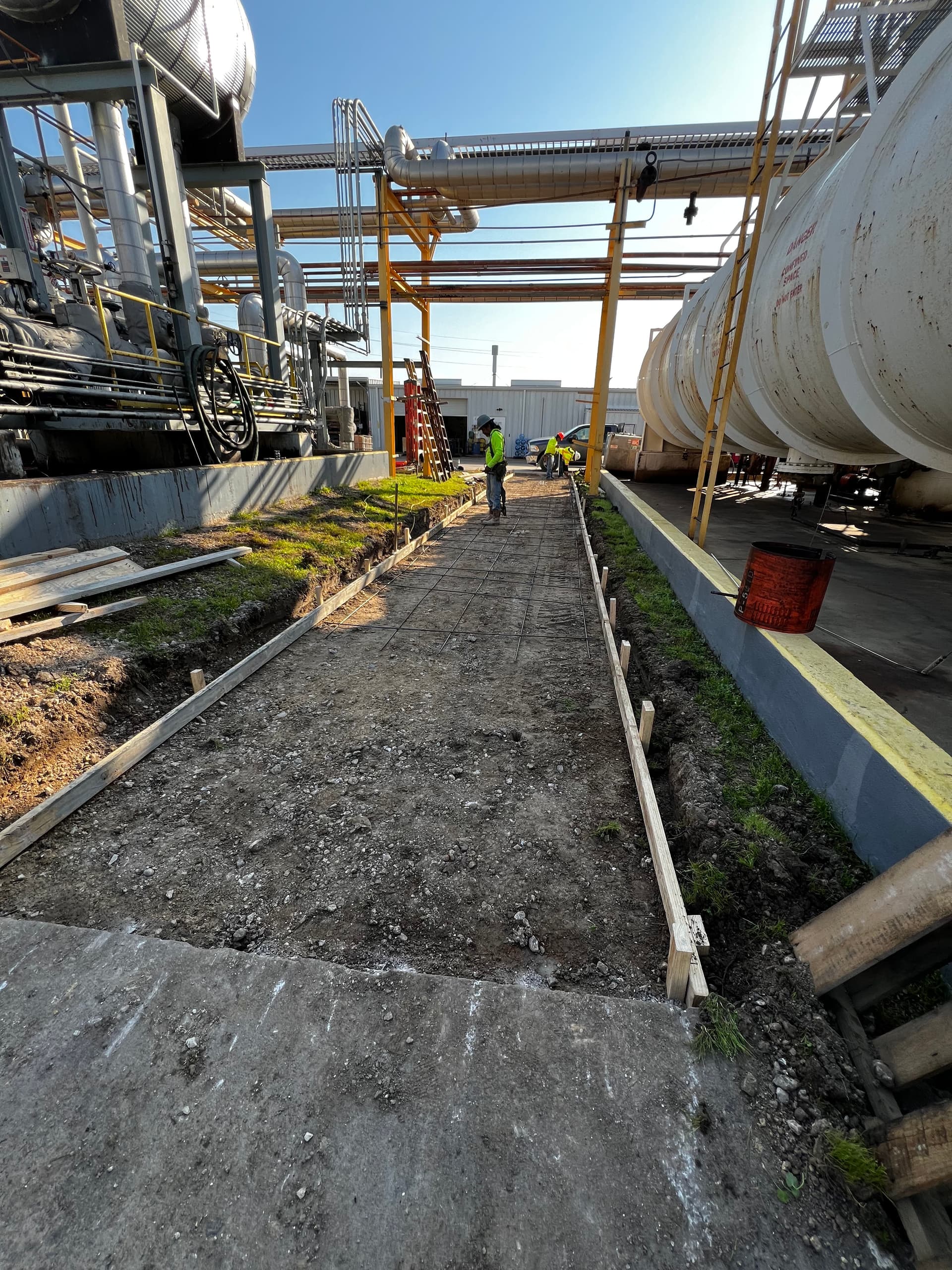
We started by clearing and grading the area with a skid steer to get a clean, stable base. Then came the forming - wood forms staked out tight to give us straight, consistent edges from one end to the other. Before a single yard of concrete went in, we laid a rebar grid across the full length of the walkway. That reinforcement is what separates a sidewalk that lasts from one that cracks and fails in a few years.
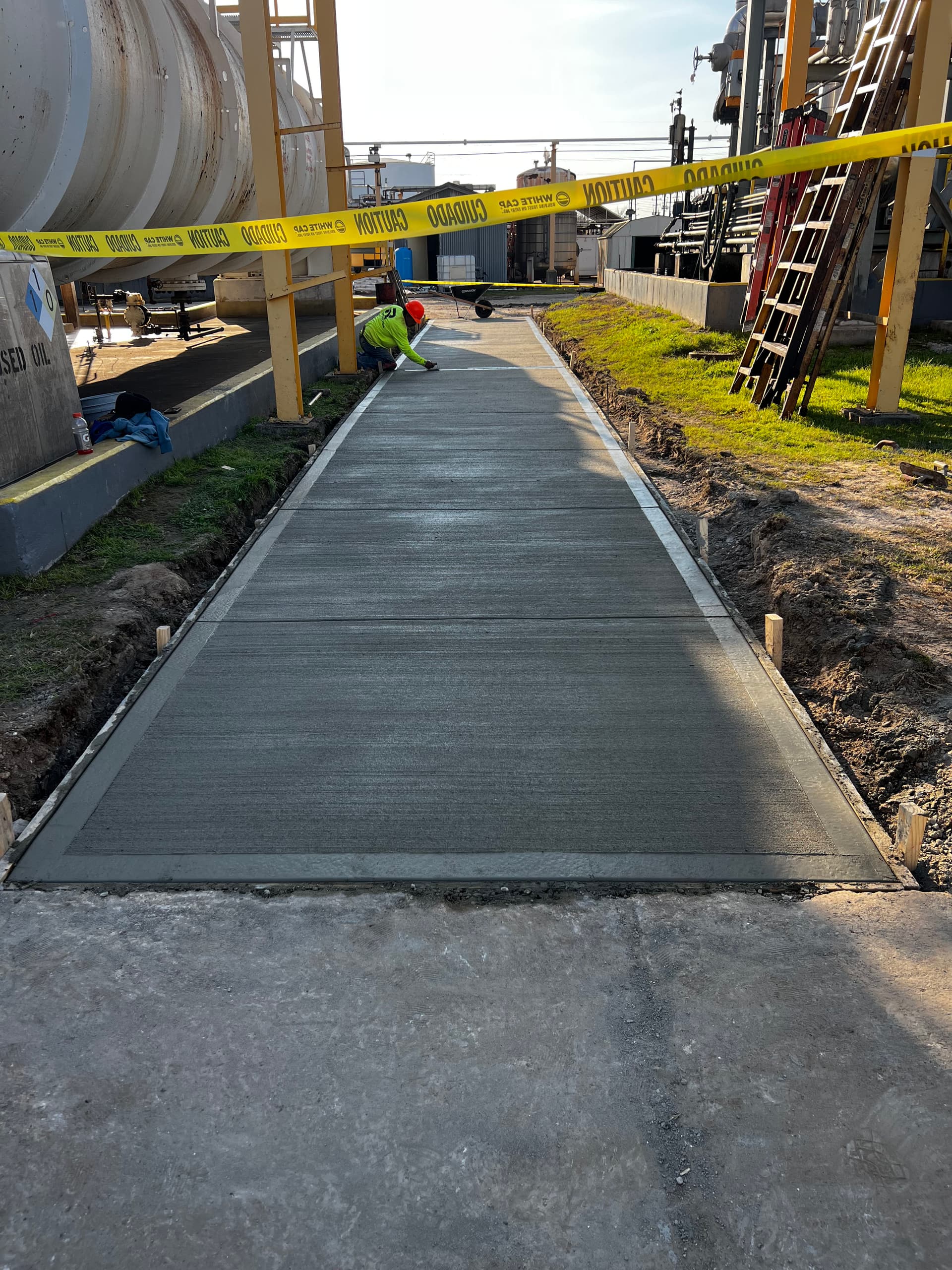
Once the pour started, the crew worked in sections - screeding the surface smooth, then finishing it with a broom texture. That broom finish isn't just for looks. It gives the surface real grip underfoot, which matters a lot in an environment like this where slip hazards can't be ignored. Every control joint was hand-tooled to help manage cracking over time.
What you end up with is a solid, level concrete sidewalk that connects the crew directly to the utility room - no more navigating uneven ground or muddy patches. That's what good concrete work actually does. It makes the space function the way it should, and it does it for decades without much thought required.
Whether it's an industrial facility walkway, a commercial sidewalk, or a pathway on a job site, the approach is the same - proper prep, solid forming, reinforced concrete, and a finish that holds up. That's the standard we hold ourselves to on every pour.