Industrial Retaining Wall Built Right from the Ground Up
Retaining walls at an industrial site aren't something you can cut corners on. The stakes are higher, the loads are heavier, and the consequences of a wall that fails are a lot more serious than a cracked backyard planter. That's exactly why the prep work matters just as much as the pour itself.
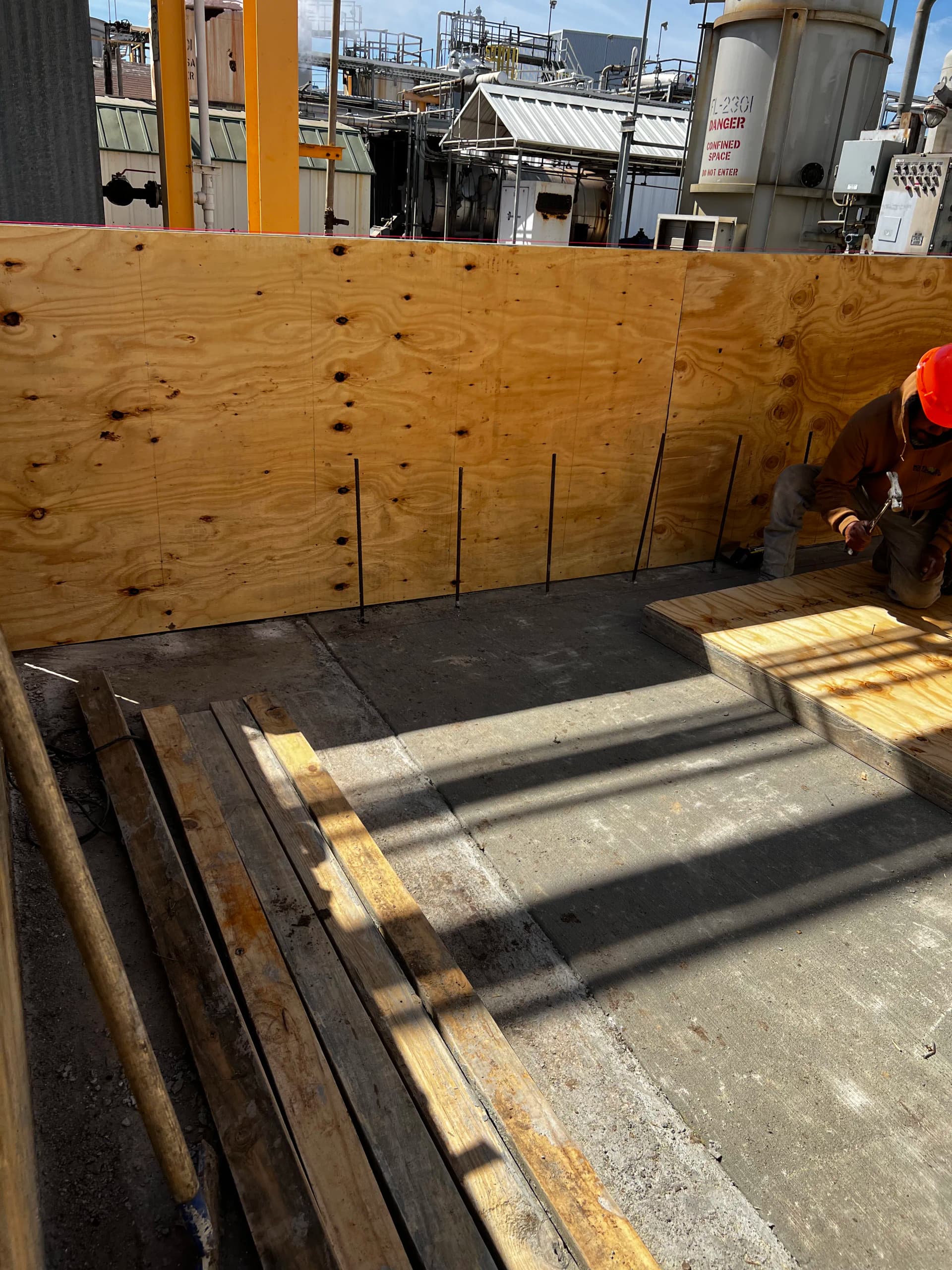
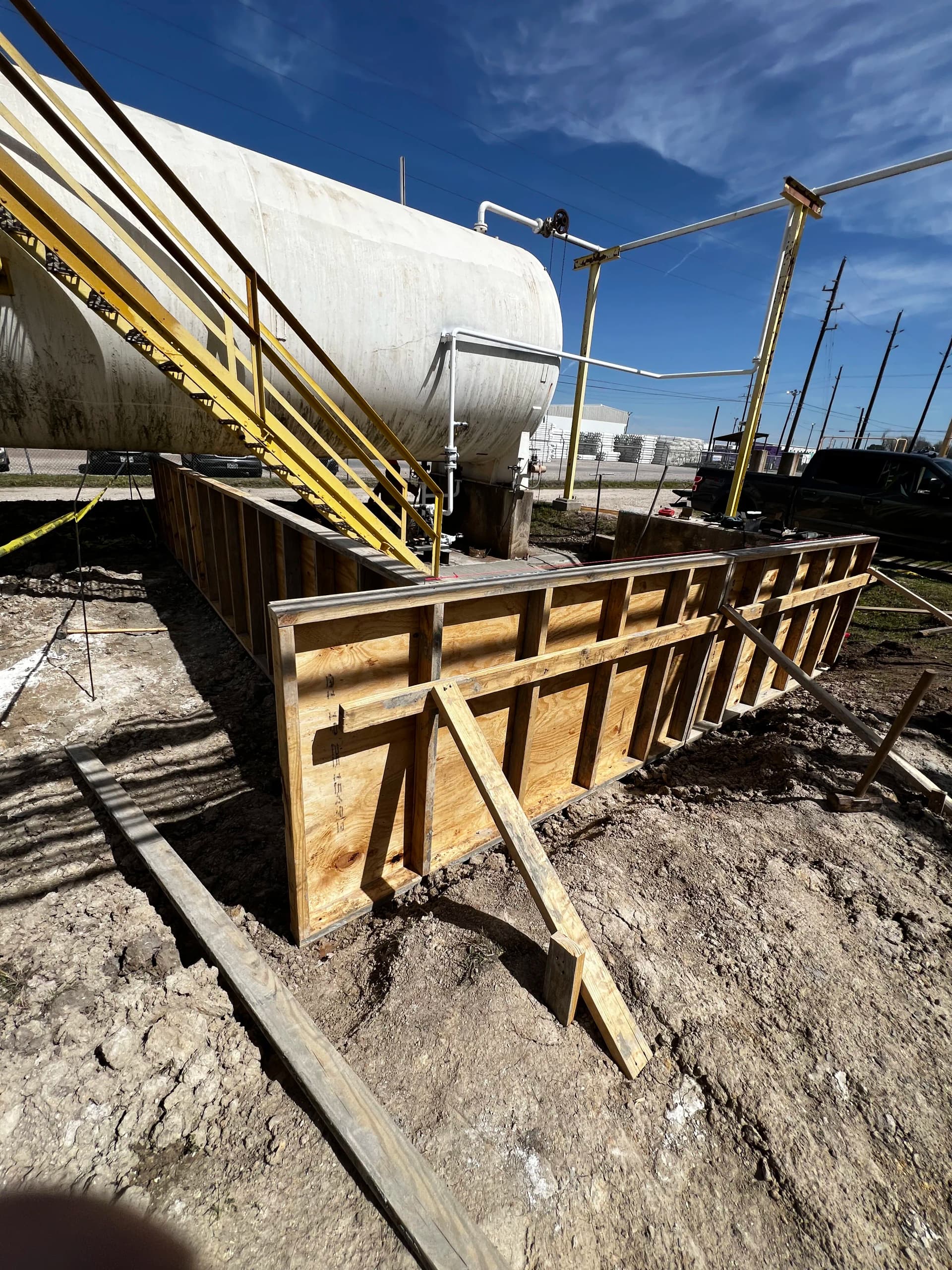
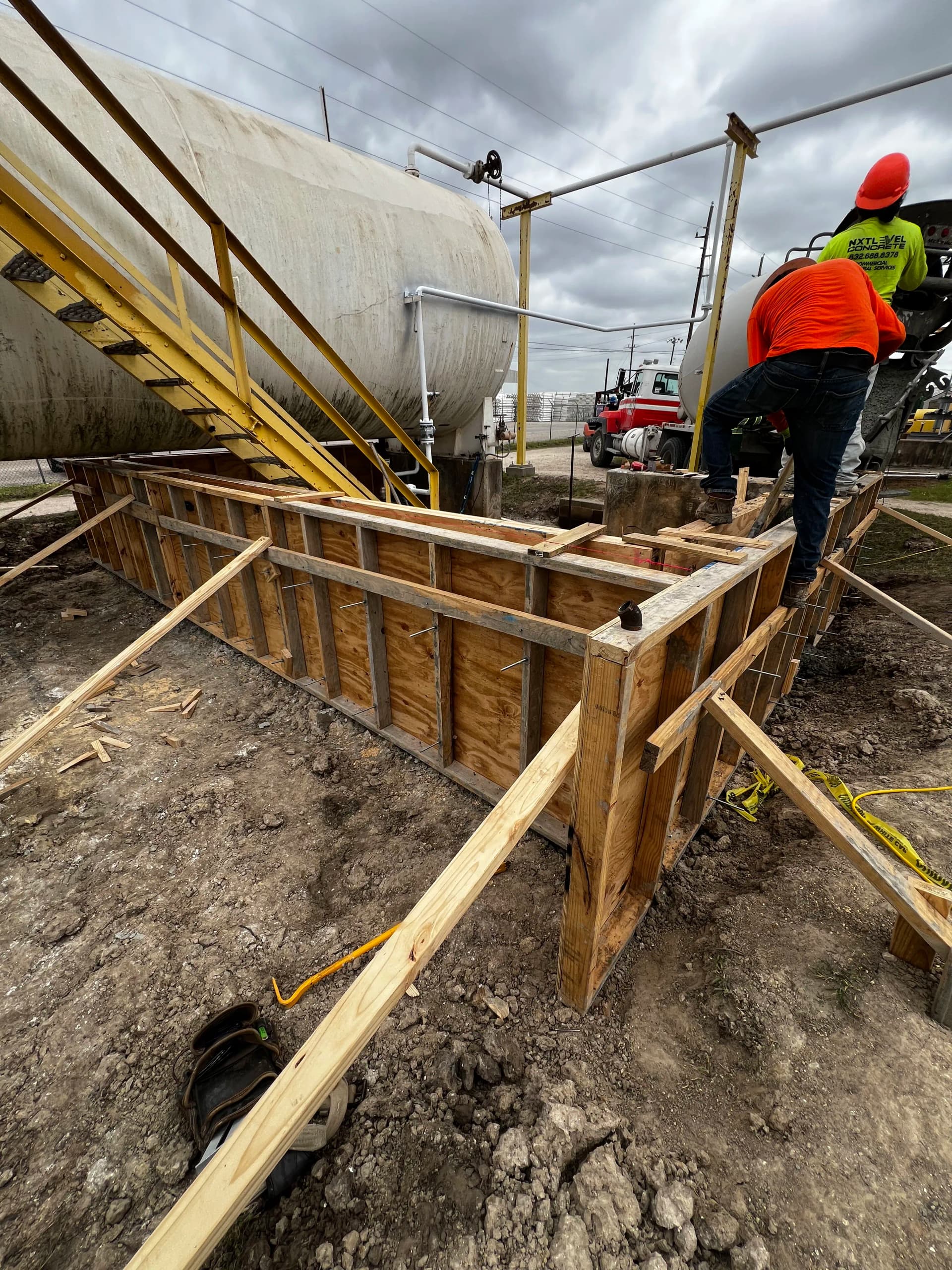
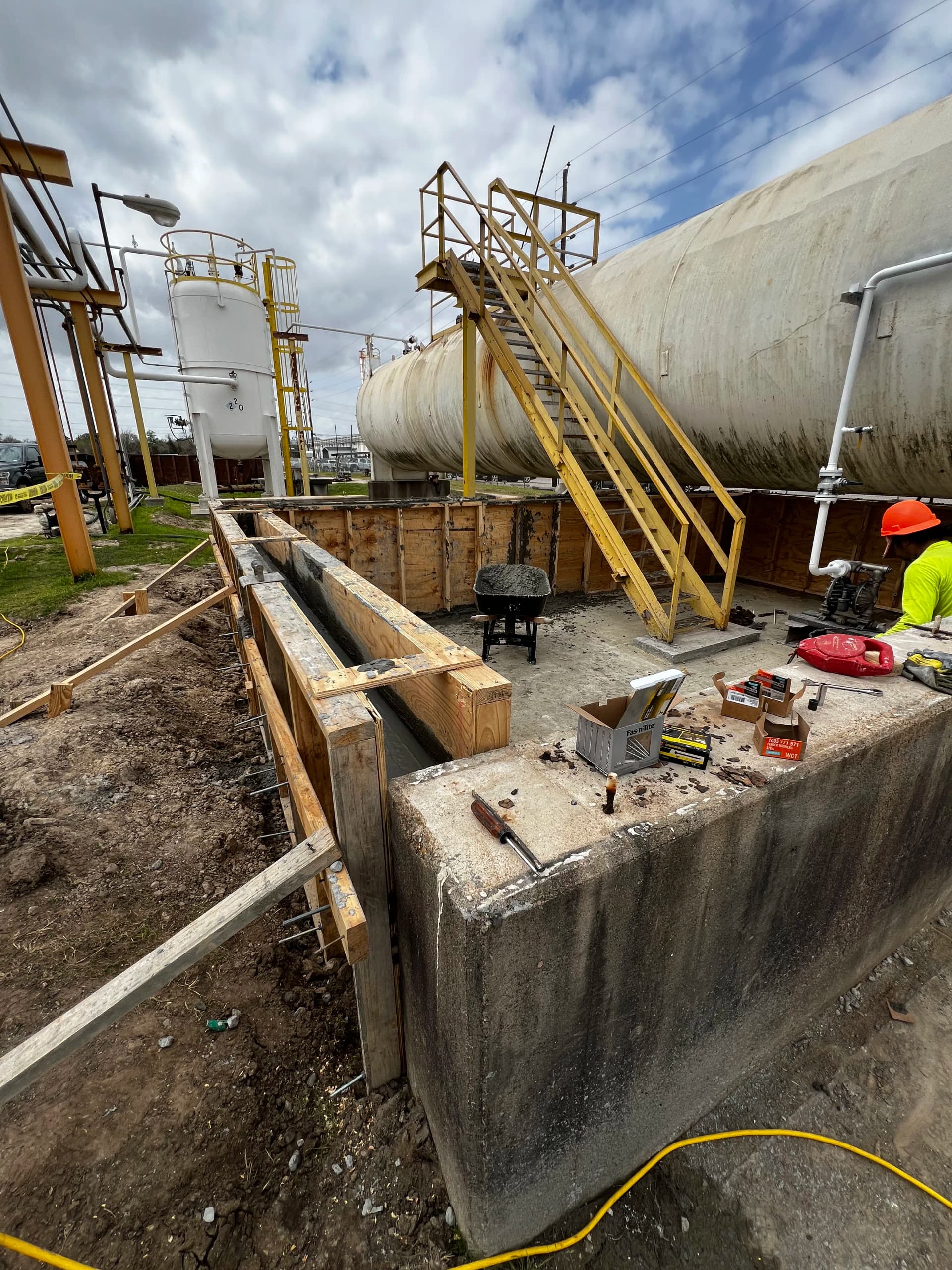
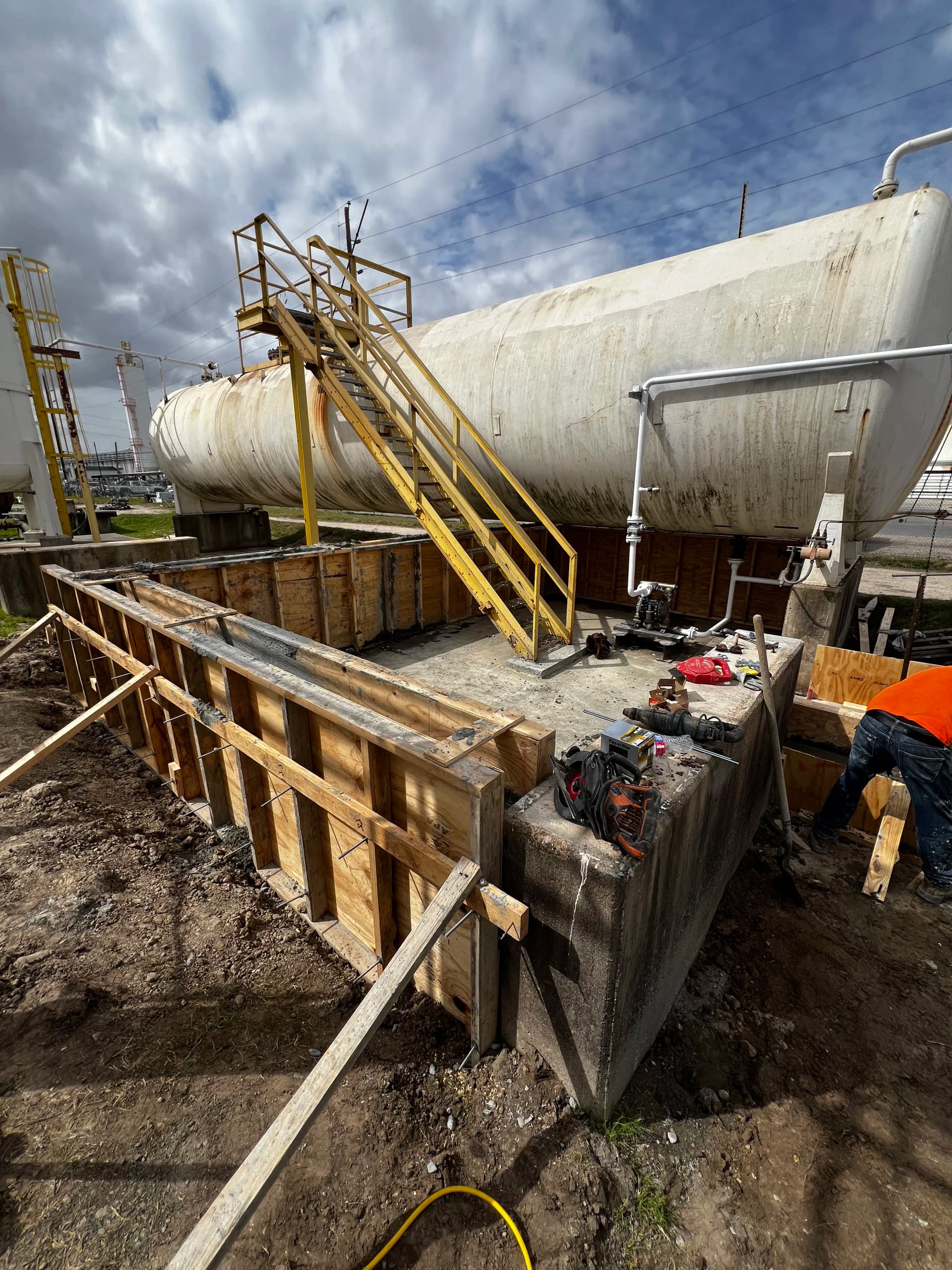
Here's what we were working with - a large-scale retaining wall build at an active industrial facility, surrounded by pressure vessels and equipment that had to stay protected throughout the whole process. We built out a full wood form system, braced and tied correctly so the concrete has somewhere solid to go and no room to shift. The rebar set into the footing ties the wall sections together and gives the whole structure the tensile strength it needs to handle real lateral pressure.
Forming work like this takes time to do right. The panels have to be plumb, the bracing has to hold, and the footings have to be cured and solid before the walls go up. Skip any of those steps and you end up with a wall that looks fine on day one and starts moving on year two. We don't work that way.
What you're seeing is concrete work that's built to do a real job - holding ground, protecting infrastructure, and staying put for the long haul. Industrial sites demand that level of precision, and that's exactly the standard we bring to every pour, no matter the size of the job.
Good foundations and solid retaining walls don't get a lot of attention until something goes wrong. Our goal is to make sure nothing ever does.