Stone Overlay Pool Decks That Actually Look Custom
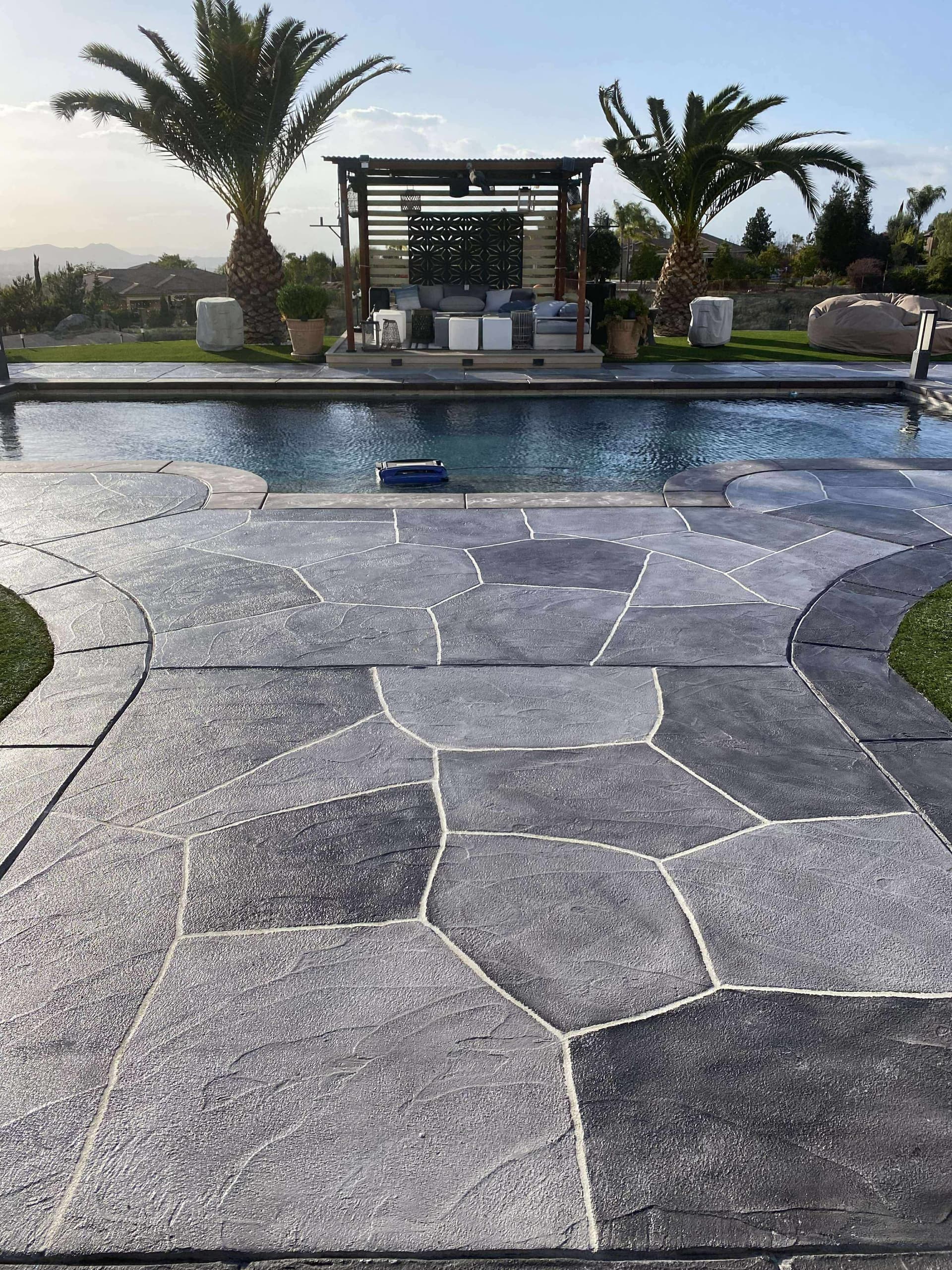
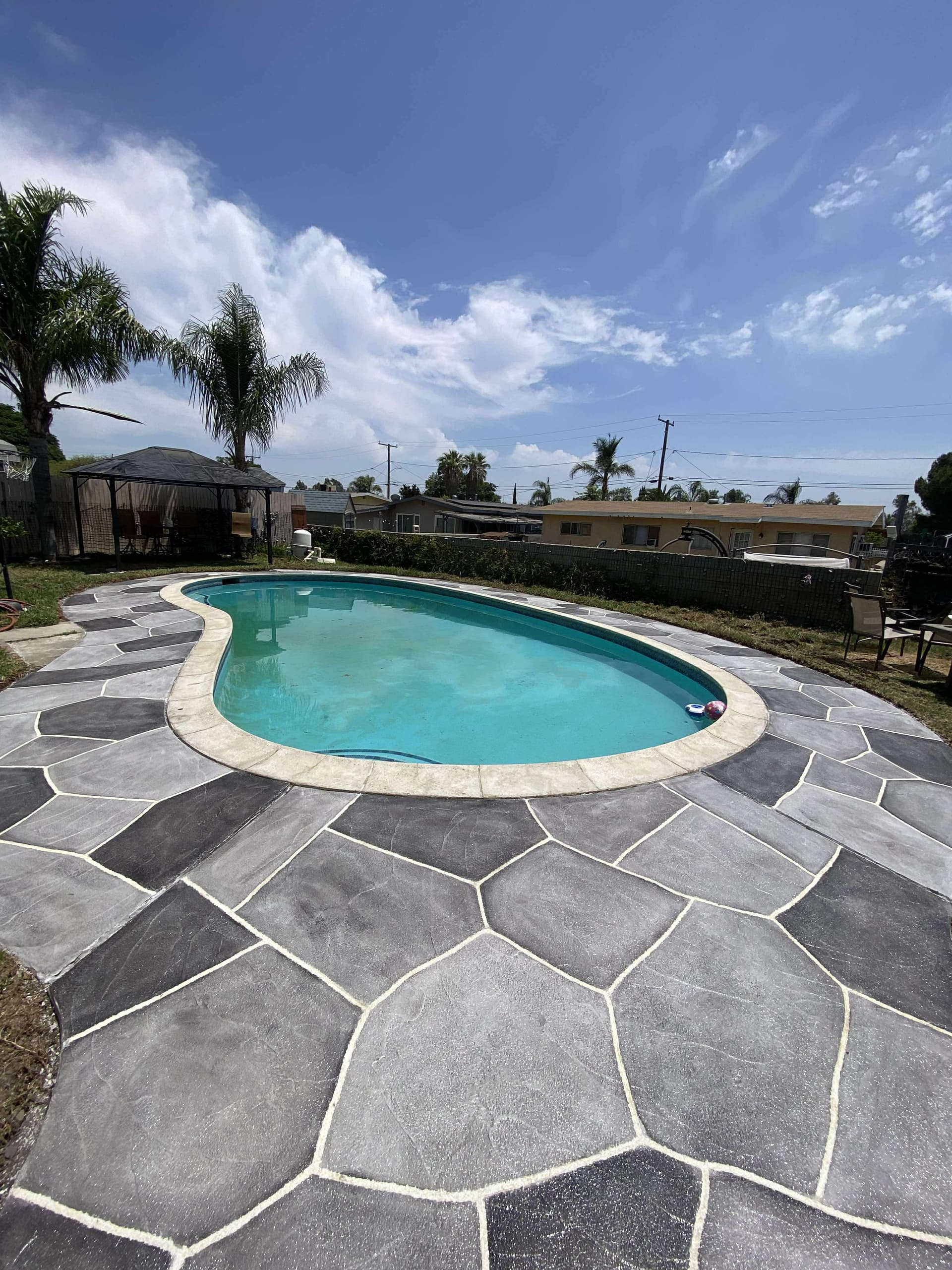
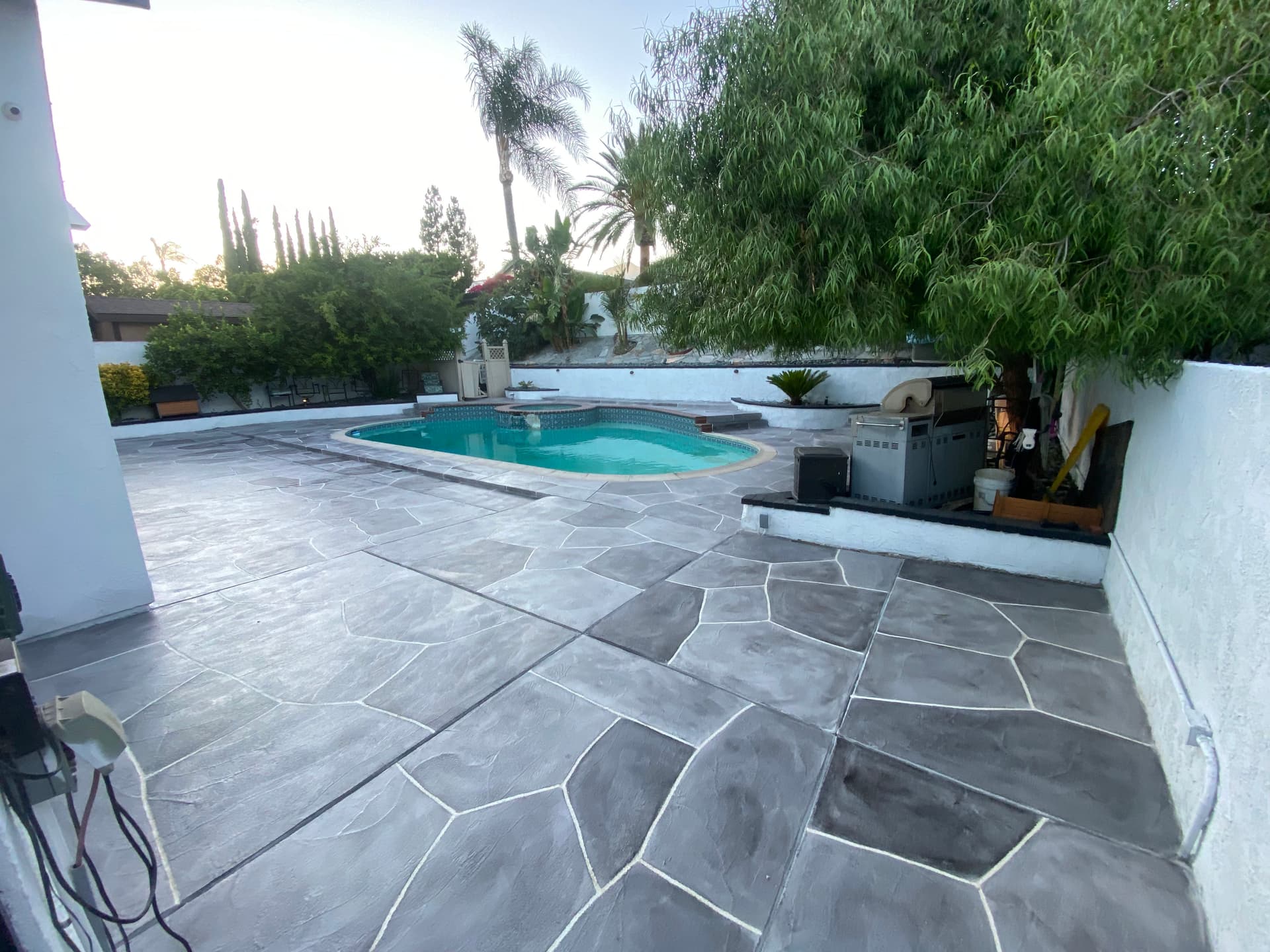
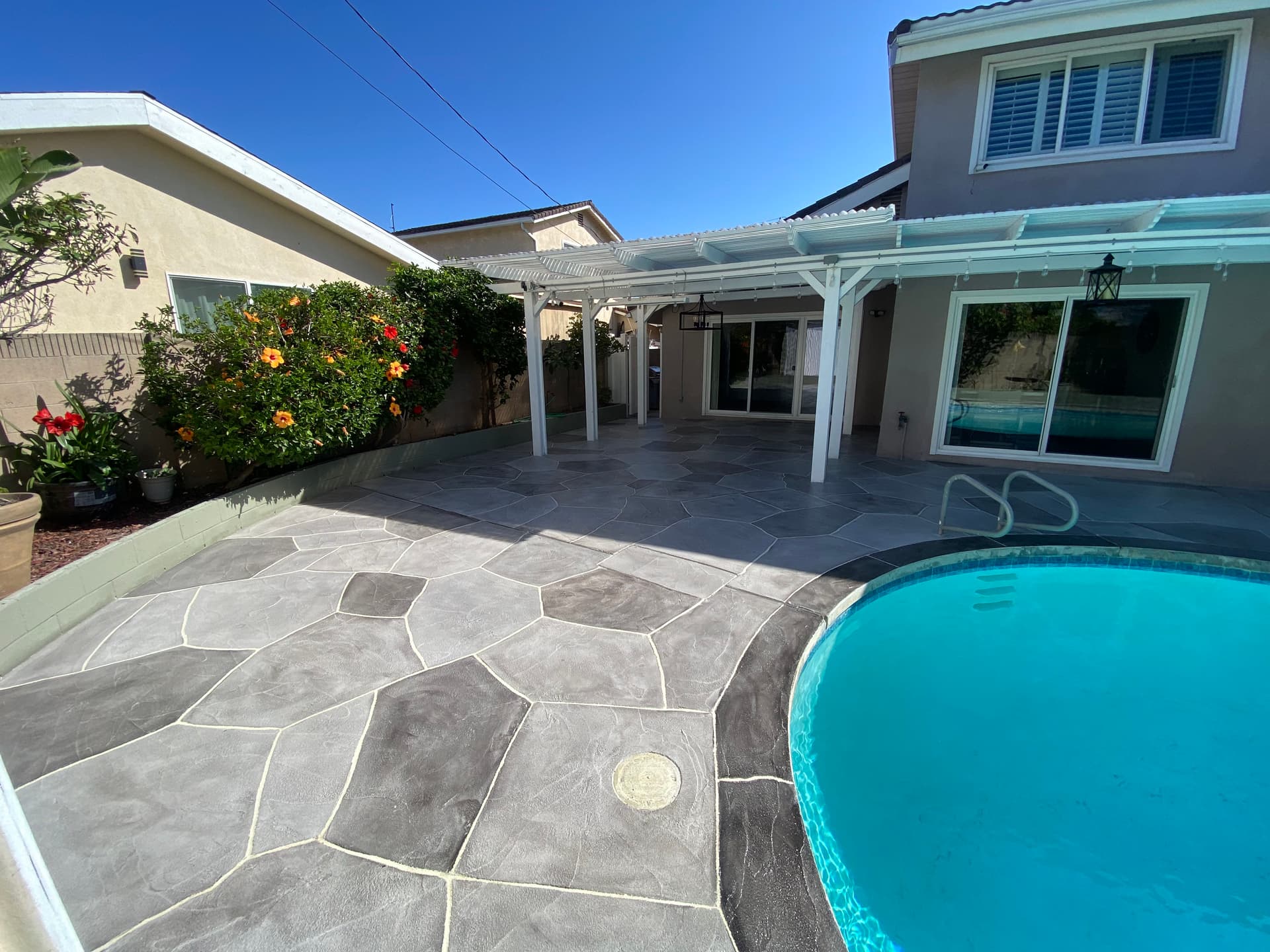
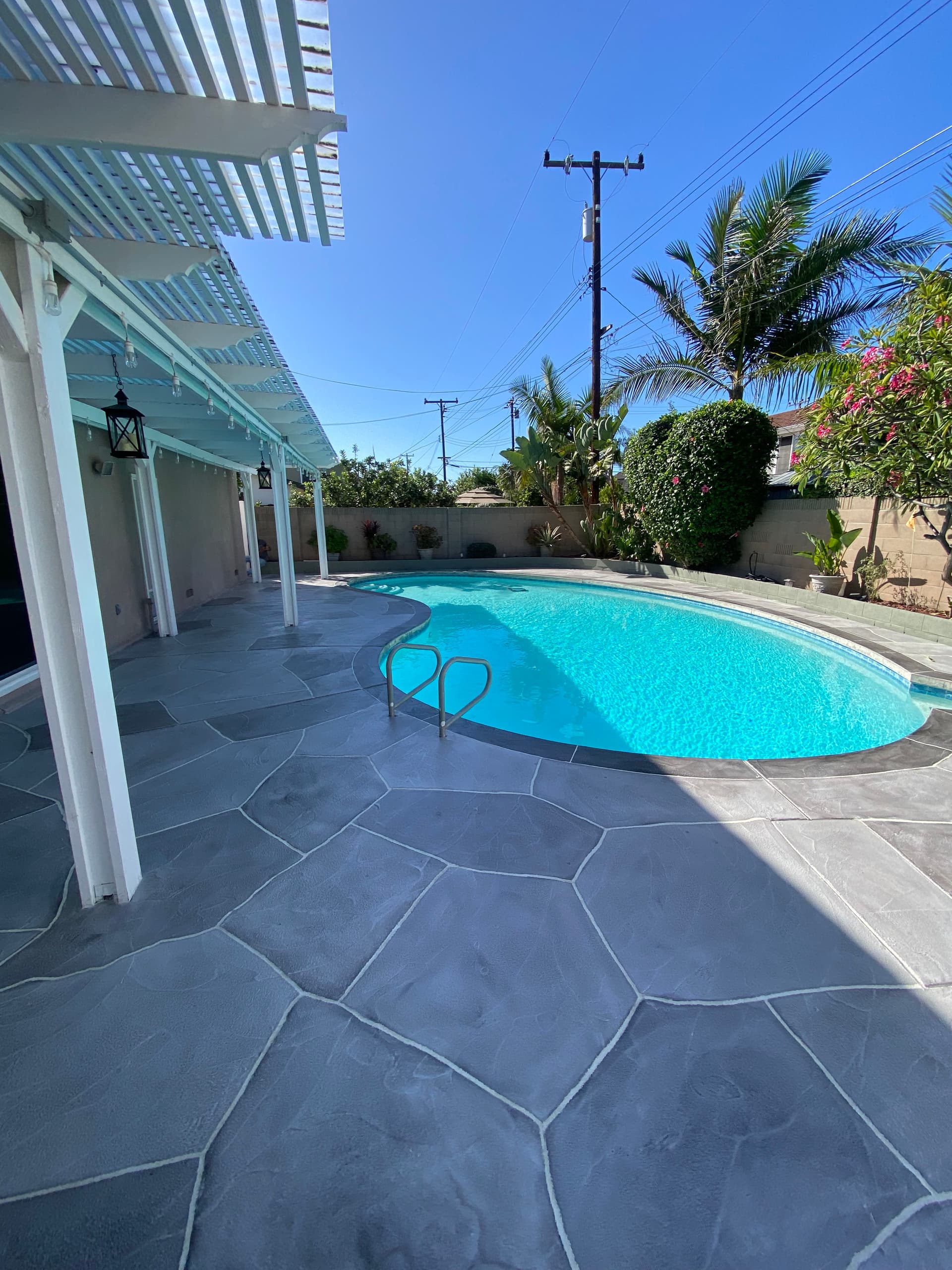
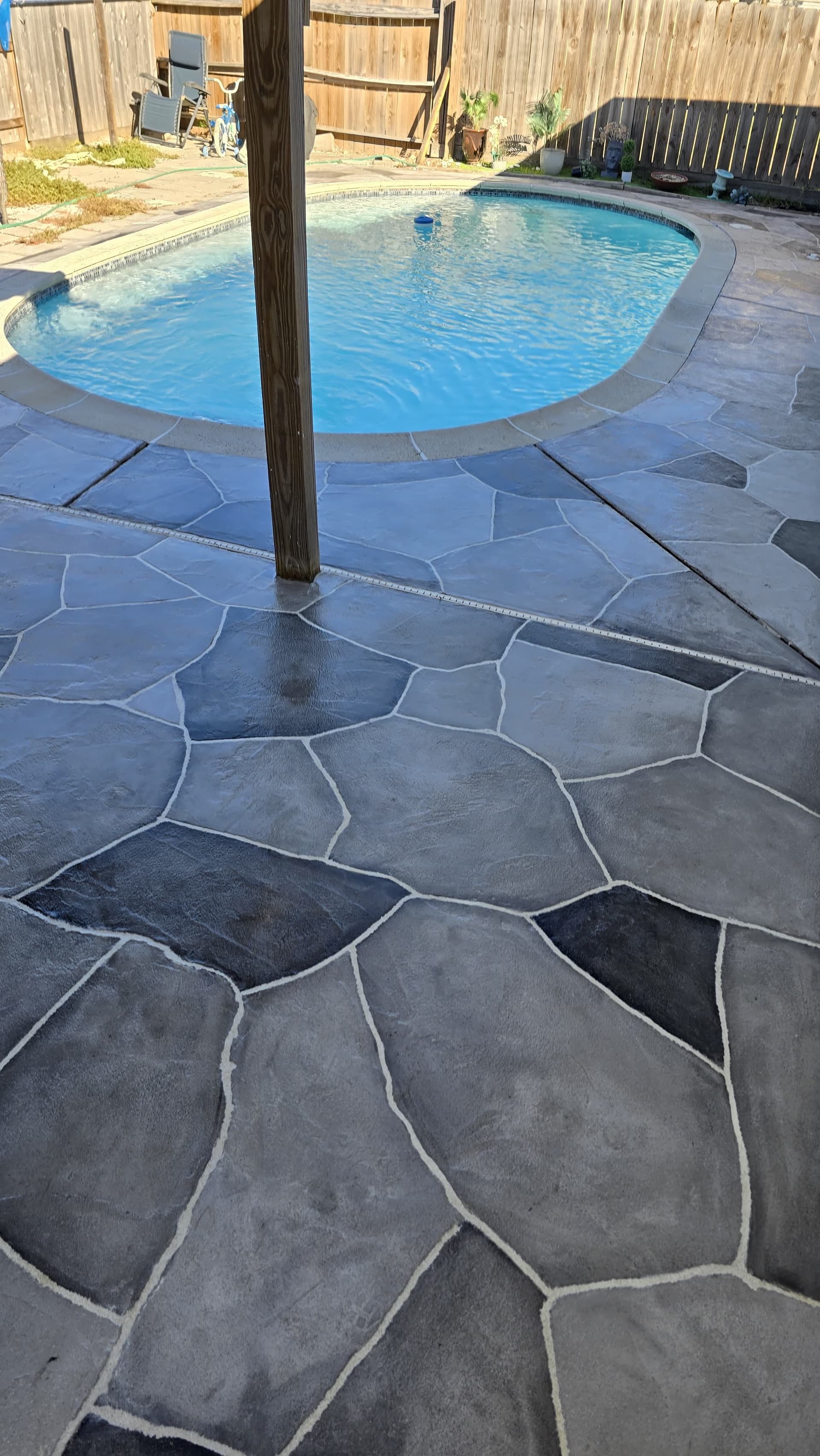
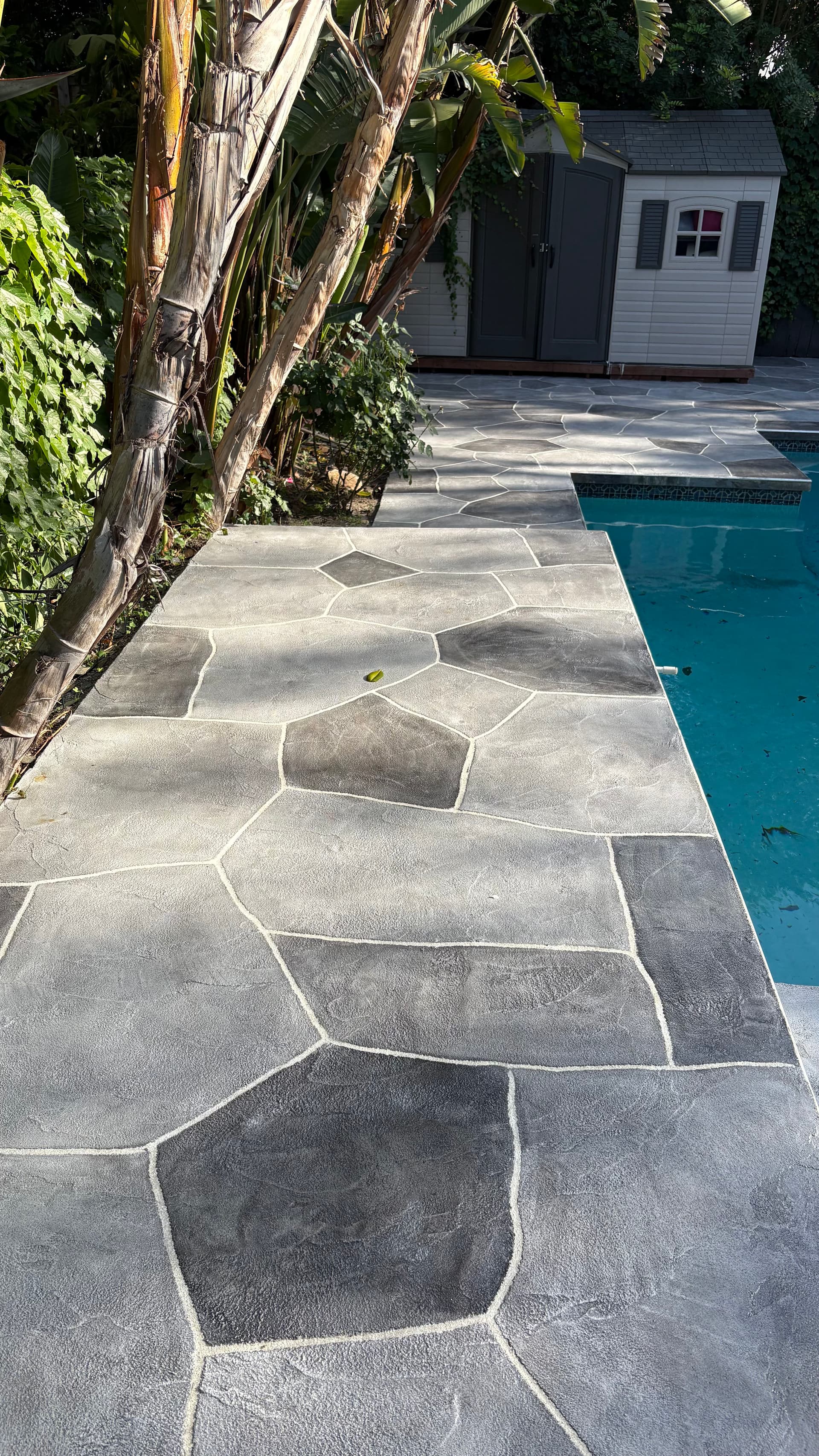
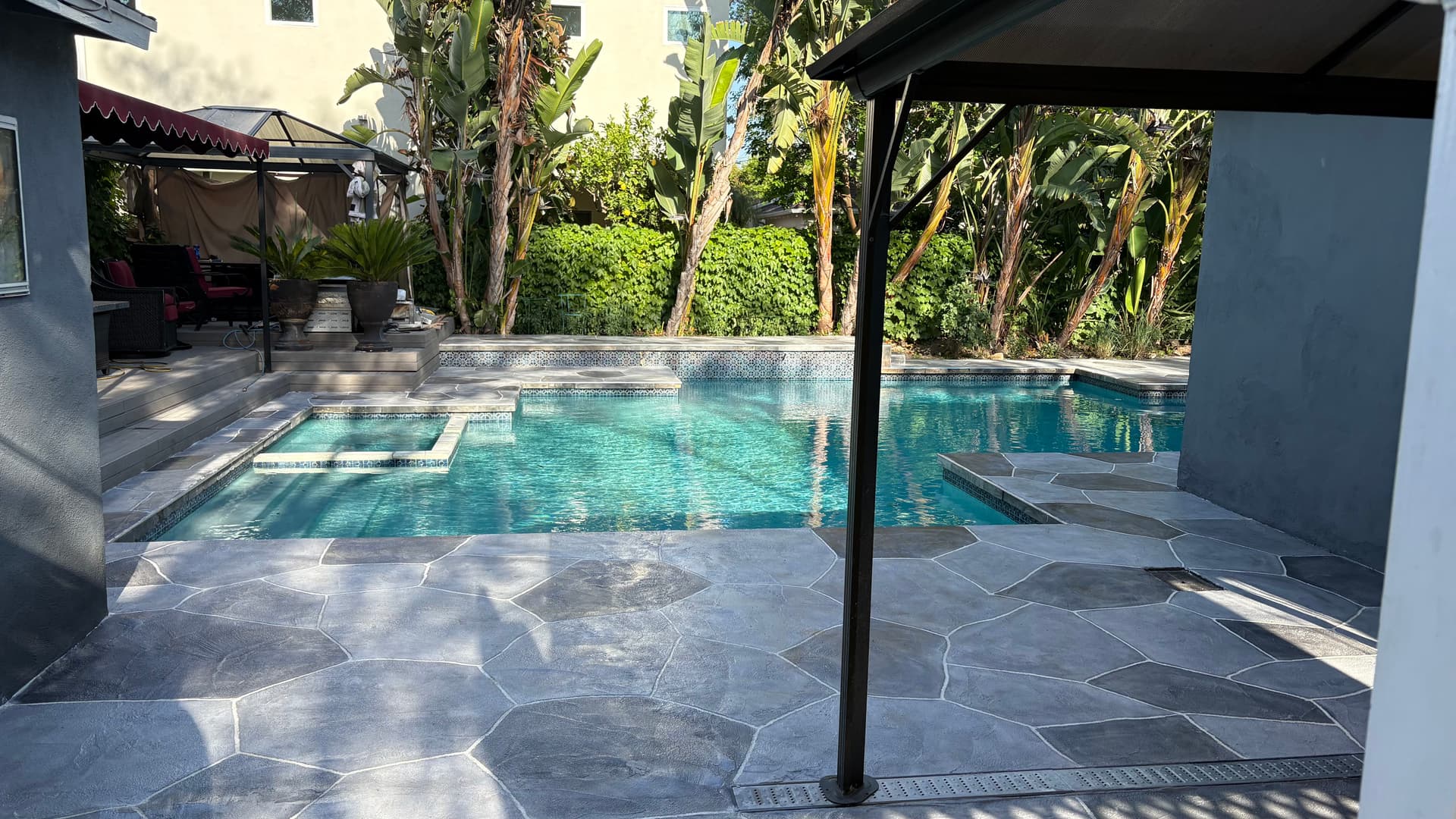
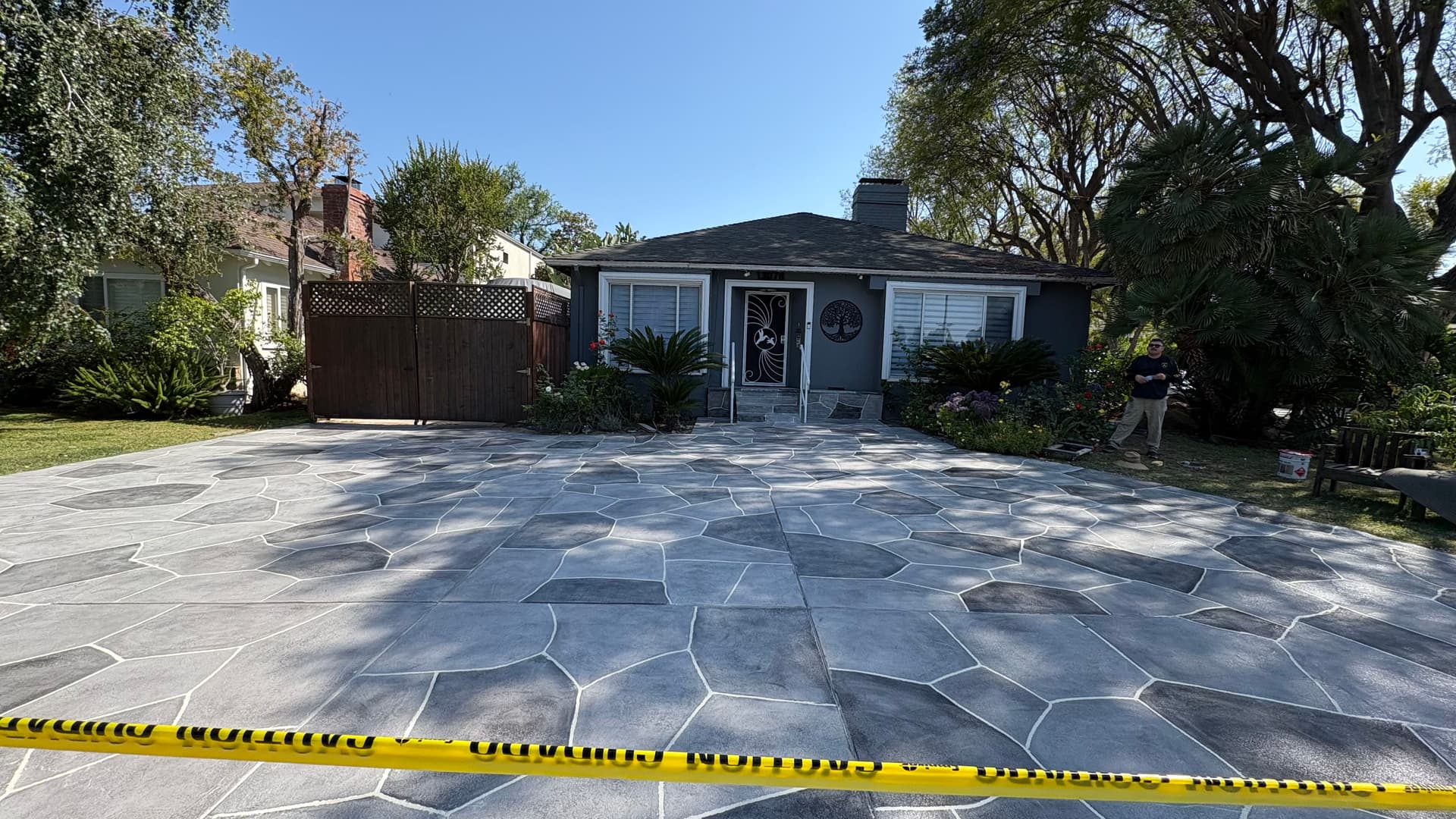
A lot of homeowners think upgrading a pool deck means tearing everything out and starting over. It doesn't. A stone overlay goes right over your existing concrete - and the finished result looks like you had natural flagstone laid from scratch. That's exactly the kind of work we've been doing across multiple backyards, and the results speak for themselves.
What makes this overlay style work so well around a pool is the combination of texture and color variation. The hand-applied stone pattern gives each slab its own character - lighter edges, darker centers, natural-looking variation across the surface. No two sections look exactly the same, which is what keeps it from looking like a generic stamped job. It reads like real stone because the craftsmanship is treated that way.
The versatility is worth mentioning too. We've done this overlay on pools of all different shapes - kidney, rectangular, freeform. It wraps curves cleanly, runs under pergolas and patio covers, and connects the pool area to the rest of the backyard without any awkward transitions. The same technique also works on driveways, which you can see in one of the finished shots - same bold flagstone pattern, same grey tones, same clean white grout lines tying it all together.
Durability is a common question we get. The overlay is designed to handle outdoor conditions - foot traffic, pool water, sun exposure. The textured surface also adds grip, which matters when people are walking around a wet pool deck. It's not just a cosmetic upgrade. It's a practical one too.
If your pool deck is looking tired, faded, or cracked, resurfacing with a stone overlay is one of the most cost-effective ways to change the entire feel of your backyard. No demo, no massive disruption - just a fresh surface that looks like it was always meant to be there.